
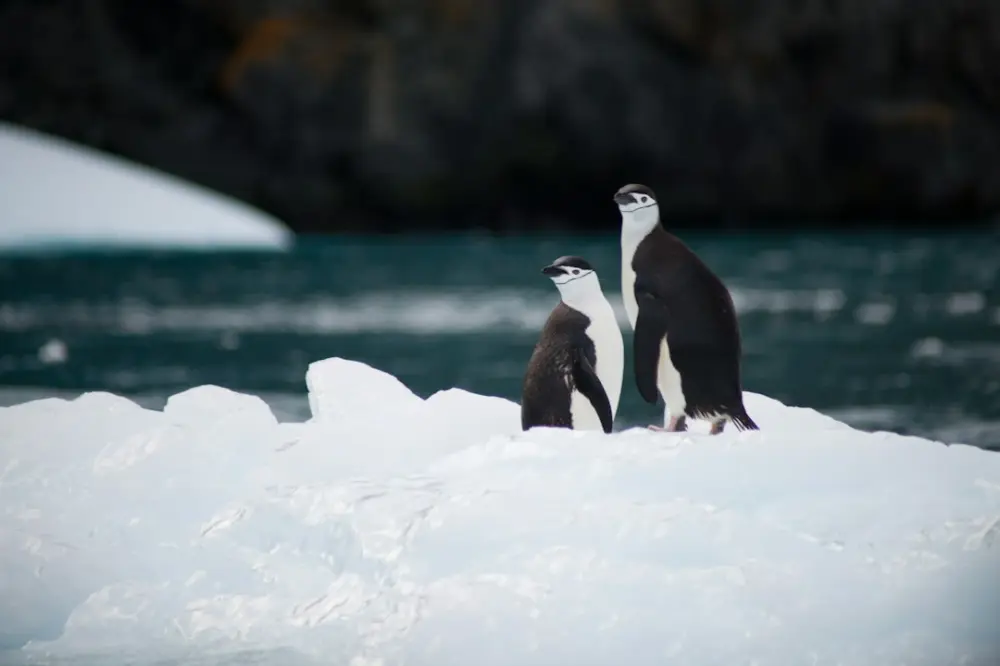
Historical penguin and glacier media projects are archival films, photography, and documentaries that record polar ecosystems and wildlife behavior over time. These works, spanning from early 20th-century expeditions to modern high-definition series, serve as essential visual records for studying species adaptation, glacial retreat, and the history of natural history filmmaking in extreme environments.
In 2026, these digital assets provide a baseline for environmental researchers and virtual tourists alike. By examining 35mm nitrate film reels alongside modern 8K sensor data, analysts can track physical changes in ice shelves and the shifting nesting patterns of Adélie or Emperor penguins across decades of recorded history.
Early Expeditions to Modern Polar Documentaries
The origins of polar media are rooted in the "Heroic Age" of Antarctic exploration. Pioneers like Herbert Ponting, the camera operator for Robert Falcon Scott’s Terra Nova expedition, used hand-cranked cinematograph cameras to capture the first moving images of the South Pole. These early films, such as The Great White Silence, were not merely entertainment; they were scientific records that documented the scale of the Ross Ice Shelf and the social structures of penguin colonies before the advent of modern ecological theory.
As technology progressed, the focus shifted from survival narratives to biological study. During the mid-20th century, 16mm color film allowed for more portable equipment, enabling filmmakers to document the vibrant blues of glacial ice and the specific orange hues of King penguin markings. These archives are often categorized through university collaborations in digital tourism history, where academic institutions work to digitize deteriorating celluloid to ensure the footage remains accessible for 21st-century climate modeling. Modern documentaries now utilize satellite-linked cameras that provide year-round surveillance of remote glaciers, offering a continuous stream of media that was impossible for early explorers to achieve.
Capturing Life on the Ice
Filming in polar environments requires specialized equipment capable of withstanding temperatures well below -40 degrees Celsius. In the early days, filmmakers had to use specialized non-freezing lubricants for their camera gears to prevent the mechanical parts from seizing. Today, digital sensors must be housed in heated, weather-sealed enclosures to prevent battery failure and internal condensation. A common example of modern technical innovation is the use of "Crittercams"—small, non-invasive cameras attached to penguins—which provide a first-person perspective of underwater foraging and glacial navigation.
Glacial photography presents its own set of challenges, particularly regarding scale and movement. Time-lapse photography has become the standard tool for capturing glacial retreat. By placing ruggedized camera rigs on stable rock outcroppings overlooking a glacier, filmmakers can compress years of slow ice movement into a few seconds of footage. This technique provides a clear visual representation of calving events—where large chunks of ice break off into the sea—which are often the most dramatic and informative segments of polar media projects. These techniques mirror the methods used in exploring historical virtual whale experiences, where remote sensing and archival footage combine to recreate environments that are otherwise difficult for the public to visit.
Evolution of Penguin Storytelling
The way penguins are portrayed in media has undergone a significant shift from anthropomorphic comedy to complex ecological representation. Early newsreels often framed penguins as "clowns of the Antarctic," focusing on their waddling gait for comedic effect. This narrative style persisted for decades, often ignoring the harsh biological realities of their life cycle. However, the release of high-budget features like March of the Penguins in the early 2000s introduced a more dramatic, survival-focused narrative that emphasized the endurance required to raise chicks in extreme conditions.
In 2026, the storytelling has moved toward immersive digital heritage. Instead of a linear film, researchers now develop interactive modules where a user can toggle between different decades of footage at the same geographical coordinate. For instance, a digital tourism project might allow a viewer to see a specific glacier in the 1940s, 1980s, and 2020s. This multi-layered approach moves beyond simple entertainment, providing a practical tool for visual literacy in natural history. The focus is no longer just on the individual animal but on the penguin as a bio-indicator of the health of the entire glacial ecosystem.
First Steps for Researching Polar Media
- Start by identifying specific archival collections from the "Heroic Age" of exploration to establish a historical baseline.
- The first step is to verify the metadata and geospatial tags associated with historical glacier footage to ensure accurate placement.
- To begin the comparative analysis, cross-reference 35mm nitrate film records with modern 8K sensor data for physical change tracking.
- Next, consult with academic institutions involved in university collaborations in digital tourism history to access digitized reels.
- Finally, integrate your findings with frameworks from exploring historical virtual whale experiences to contextualize polar wildlife behavior within broader marine history.
Preserving Polar Media Records
Preserving these media records involves more than just keeping old film in a cold room. Digital preservation requires a rigorous process of metadata tagging and color calibration to ensure that the data remains useful for scientific comparison. For those working in digital tourism and heritage, the priority is maintaining the integrity of the original frame while making it compatible with modern VR and AR platforms. High-resolution scanning of 70mm IMAX film, for example, allows for the creation of immersive glacier tours that retain the detail of the original large-format capture.
Practitioners should focus on the following technical priorities for polar media heritage:
- Bit-depth and Color Accuracy: Ensuring that the specific whites and blues of glacial ice are not lost during digital compression.
- Geospatial Tagging: Linking historical footage to precise GPS coordinates to allow for accurate environmental comparison.
- Format Migration: Moving data from obsolete physical media to cloud-based cold storage to prevent hardware-based data loss.
By treating these films and photographs as data points rather than just visual assets, we ensure that the history of the poles remains a living record. This practical approach to archiving is a core focus of the Lupa Corp Heritage Guide, where we analyze how digital tourism can bridge the gap between historical polar expeditions and contemporary environmental research through the lens of virtual media heritage.